Why Dental Crowns Are Essential in Restorative Dentistry
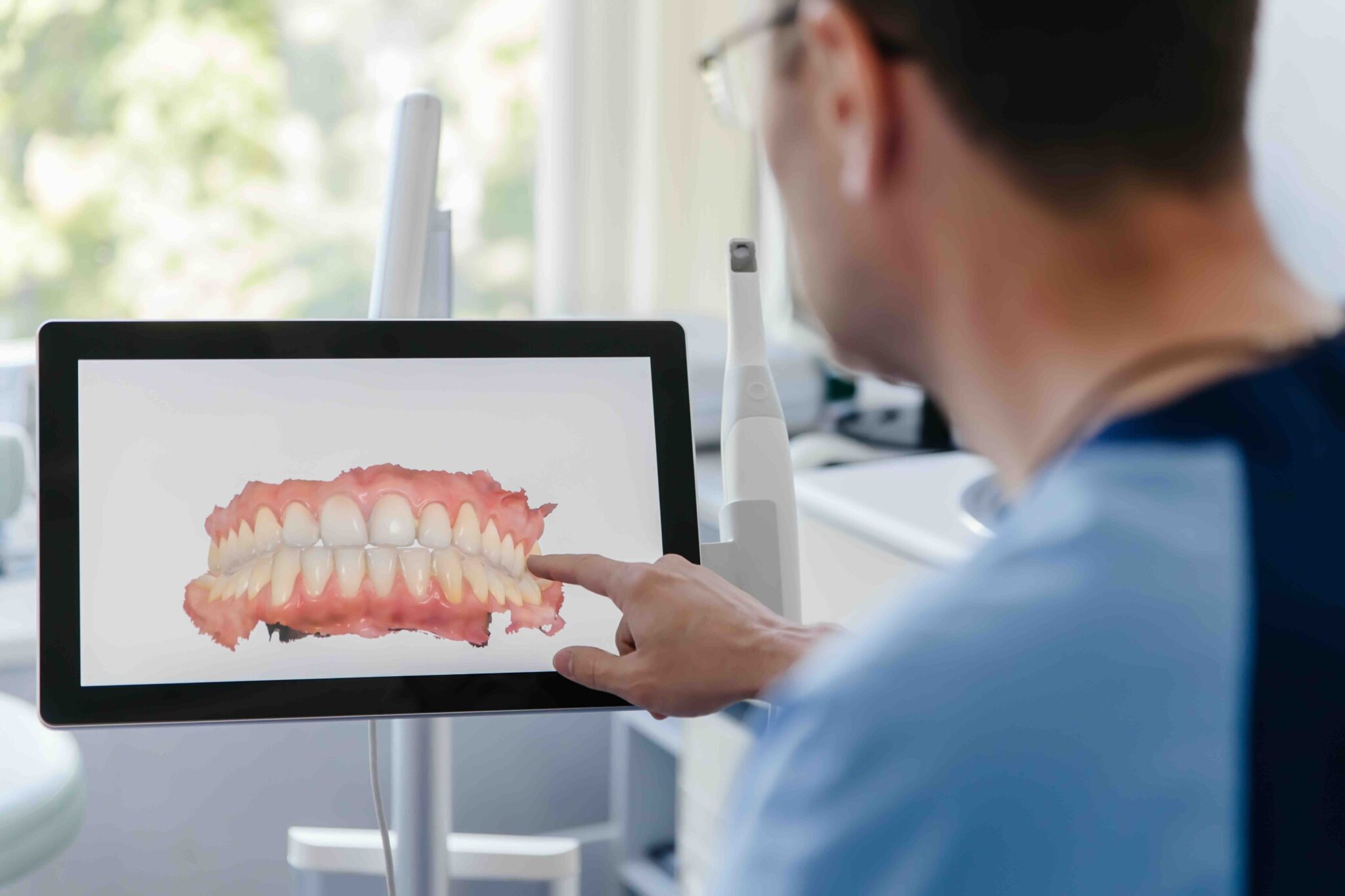

Restorative dentistry is often described in technical terms, but at its core it solves a simple human problem: teeth wear down, crack, decay, and break, yet people still need to chew comfortably, speak clearly, and smile without hesitation. Among the tools dentists rely on to rebuild damaged teeth, Dental Crowns remain one of the most dependable and versatile. They are not glamorous, and they are not always the first treatment a patient hopes to hear about, but they are frequently the option that gives a compromised tooth a real future.
A crown is, in practical terms, a protective cap custom made to fit over a prepared tooth. That sounds straightforward, yet the role it plays is much larger than the definition suggests. A well-made crown restores shape, strength, bite function, and appearance at the same time. Few dental treatments do all four as predictably.
What makes crowns essential is not just that they cover a tooth. It is that they allow dentists to preserve teeth that would otherwise continue to fail under everyday pressure. A back molar can absorb hundreds of pounds of force during chewing. A front tooth has to tolerate biting, temperature changes, and years of subtle microtrauma from habits like clenching or nail biting. Once a tooth has lost enough structure, a filling may no longer be enough. At that point, the question is not whether the tooth needs treatment, but whether it needs reinforcement that works as a whole unit. That is where crowns become central to restorative care.
When a tooth crosses the line from repairable to fragile
One of the hardest judgments in dentistry is recognizing when a tooth can no longer succeed with a direct filling alone. Small to moderate cavities are often restored very effectively with composite resin. The problem begins when decay, fracture, or previous dental work has removed too much of the tooth’s natural architecture.
Teeth are stronger when their cusps, ridges, and walls are intact and connected. Once large portions are gone, the remaining structure flexes under chewing pressure. Patients do not always feel that instability at first. They may only notice a corner chipped off, a rough edge, or occasional sensitivity. From the dentist’s point of view, however, the warning signs are clearer: deep cracks, broad old fillings with leakage around the edges, thin enamel walls, or a tooth that has already been patched several times.
At that stage, placing yet another filling can sometimes be the cheaper short-term choice but the weaker long-term one. It is a familiar pattern in clinical practice. A patient wants to avoid a crown, so a large filling is placed. Six months or two years later, the tooth fractures along a cusp or splits deeper than expected. Now the treatment is more complex, and sometimes the tooth is no longer savable. Crowns help interrupt that cycle by wrapping and splinting the tooth structure together before catastrophic breakage occurs.
This is especially important after root canal treatment. A root canal can eliminate infection and pain, but it does not magically make the tooth stronger. In fact, many root canal treated teeth are structurally compromised because they have already lost substantial tooth material to decay, access preparation, or prior restorations. Back teeth that have had root canals often benefit significantly from full coverage because they need protection from fracture far more than they need another internal filling.
Strength matters, but so does force distribution
One reason Dental Crowns are so effective is that they change how biting forces are managed. A weakened tooth tends to concentrate stress on thin remaining walls. Every meal becomes a repeated stress test. Crown coverage redistributes those forces across a unified external surface, reducing the chance that one unsupported cusp will snap off.
This mechanical advantage is easy to overlook because patients experience the final result as something simple: the tooth feels solid again. Yet that feeling of solidity reflects careful planning. The dentist has to remove enough tooth structure to create space for the crown material while preserving as much healthy tooth as possible. The lab or digital milling system has to produce contours that fit the bite precisely. If the crown is too high, too bulky, or not seated accurately, the restoration may fail early or cause discomfort in nearby teeth or the jaw.
In experienced hands, a crown is not just a cap. It is a structural redesign of a damaged tooth. The anatomy is rebuilt so the tooth can return to service without taking on stress it cannot tolerate.
Crowns often prevent bigger problems than patients expect
Patients usually seek care because of a symptom, pain, sensitivity, food trapping, or a visible break. The crown is then seen as the answer to that immediate complaint. In many cases, its greater value lies in the complications it helps prevent.
A cracked tooth offers a good example. Cracks vary enormously. Some are superficial craze lines with little clinical significance. Others run through dentin and produce sharp pain when chewing. If that crack is caught early enough, a crown can bind the tooth and reduce flexure, often stabilizing it before the fracture extends further. If ignored, the crack can deepen into the root, where the tooth may need extraction. The difference between those outcomes can come down to timing.
Large failing fillings create another quiet risk. When margins open or recurrent decay forms beneath them, damage can spread out of sight. By the time the surface looks obviously broken, the cavity may already be extensive. A crown can restore the tooth after the decay is removed, sealing and reinforcing what remains. Without that coverage, the tooth may continue to fracture around the edges of each replacement filling.
There is also a periodontal angle that does not get enough attention. Teeth with broken contacts or missing walls trap food. Food packing leads to gum irritation, bleeding, localized bone loss, and chronic Dental Crowns Simple Dental Vermont discomfort that patients often describe as “something always getting stuck there.” A properly shaped crown can restore contact points and contour, making the area easier to clean and healthier for the surrounding tissues.
A crown is rarely about cosmetics alone
Because crowns can look very natural, many people assume their purpose is mainly aesthetic. Appearance matters, especially for front teeth, but the restorative role usually comes first. A crown on a front tooth may be chosen because the tooth has fractured, carries a very large old filling, has darkened after trauma, or has lost so much structure that veneers or bonding would not be reliable.
This distinction matters because the treatment planning is different. Cosmetic dentistry asks how to improve appearance. Restorative dentistry asks how to make the tooth durable, functional, and biologically stable, then how to make it look natural as well. Good crowns do both. Poorly planned crowns may look passable in a photograph but create bite problems, inflame the gums, or fail prematurely.
Shade, translucency, surface texture, and margin placement all affect the final result. Front-tooth crowns are especially unforgiving because the human eye notices asymmetry quickly. A crown that is half a millimeter too long or too opaque can look artificial even if the color is close. Back-tooth crowns, by contrast, live under heavier chewing loads and are judged more by fit and function than by fine optical detail. The treatment may use different materials accordingly.
Material choice is part science, part judgment
No single crown material is ideal for every case. The best choice depends on the tooth’s location, the patient’s bite, esthetic demands, available space, and habits such as grinding.
Dentists commonly consider a few broad categories:
- All-ceramic or porcelain based crowns, valued for appearance and increasingly strong in many situations.
- Zirconia crowns, known for durability and widely used in posterior teeth and many full contour restorations.
- Porcelain fused to metal crowns, a long-standing option that combines strength with decent esthetics.
- Full metal crowns, often gold alloy or similar materials, still respected for longevity in select back-tooth cases.
- Hybrid or newer CAD/CAM materials, used in certain situations where bonding and conservative preparation are priorities.
The material conversation is where clinical judgment becomes obvious. A patient with heavy bruxism may be a poor candidate for a delicate cosmetic ceramic on a molar. A patient with a high smile line and a damaged front tooth may need a more translucent ceramic to blend naturally. A lower second molar that barely shows when smiling may function beautifully for many years with a less aesthetic but very durable option.
There is no serious restorative philosophy that treats crowns as interchangeable shells. The choice affects fracture resistance, wear on opposing teeth, esthetics, repairability, and cost. That is one reason experienced dentists do not reduce treatment planning to material trends alone.
The process behind a successful crown
Patients sometimes imagine a crown appointment as a quick cover-up. In reality, the process succeeds because of precision at several steps. The tooth is first evaluated carefully. That includes decay removal, crack assessment, bite analysis, and, when needed, radiographs to confirm the tooth and surrounding bone are stable enough to support the restoration.
Once a crown is indicated, the tooth is shaped so the final restoration will have room and retention. Temporary crowns are often placed while the definitive crown is being made, unless same-day digital systems are used. Temporaries matter more than many people realize. They protect the prepared tooth, preserve spacing, maintain appearance, and give early feedback about contour and bite.
When the final crown is delivered, fit must be checked not just at the margin but in the bite and between neighboring teeth. Contacts that are too tight create flossing problems and patient frustration. Contacts that are too open lead to food impaction. A crown that looks excellent but sits a touch high can cause soreness, sensitivity, or even cracked porcelain over time. Fine adjustments are routine and important.
In the best cases, the finished crown disappears into everyday life. Patients stop thinking about the tooth because it feels normal again. That sense of normalcy is usually the result of many small technical decisions being made well.
Crowns and implants, bridges, and full-mouth rehabilitation
Dental Crowns are not limited to damaged natural teeth. They are also essential components of larger restorative plans. Implant dentistry depends on crowns to create the visible, functional replacement tooth above the implant fixture. Bridgework relies on crowns placed over supporting teeth, called abutments, to anchor the replacement of a missing tooth. Full-mouth rehabilitation frequently uses a series of crowns to reestablish vertical dimension, correct collapsed bites, and restore worn dentitions.
These are not niche situations. Severe wear from years of grinding, acid erosion, or untreated reflux can flatten teeth dramatically. In those cases, crowns may be the main method for rebuilding lost height and function. A patient who has spent years avoiding chewy foods, biting only on one side, or living with recurrent fractures can experience a major improvement once the bite is stabilized and the teeth are protected.
This broader role is one reason crowns are so deeply embedded in restorative dentistry. They are not merely single-tooth solutions. They are building blocks for reconstructing entire functional systems.
The trade-offs patients should understand
Calling crowns essential does not mean they are perfect or always simple. Good treatment planning includes honest discussion of trade-offs. Crowns require removal of tooth structure. That preparation is justified when the remaining tooth is too compromised to survive predictably otherwise, but it is still a real consideration. Conservative dentistry matters, and not every damaged tooth needs full coverage immediately.
Cost is another practical factor. Crowns are more expensive than fillings because they involve more chair time, laboratory work or digital fabrication, and greater technical complexity. For some patients, the financial barrier leads to delay, and delay can narrow future options.
There is also the possibility of complications. A tooth may become sensitive after preparation. A crown margin can fail years later if oral hygiene is poor or decay develops underneath. Porcelain can chip. Cement can wash out. A previously asymptomatic tooth may later require root canal treatment. None of these issues make crowns a poor choice, but they do underscore that crowns are restorations, not lifetime guarantees.
The real question is whether the expected benefit outweighs the alternatives. In many heavily restored, cracked, or structurally weakened teeth, the answer is yes.
Longevity depends on more than the crown itself
Patients often ask how long a crown will last. A reasonable answer is that many crowns function well for ten to fifteen years, and some last much longer, but longevity varies widely. The crown is only one part of the equation. The underlying tooth, the margin quality, bite forces, hygiene habits, and regular maintenance all influence survival.
A beautifully fabricated crown on a patient who grinds aggressively without a night guard may fail sooner than a modestly complex crown on a patient with a stable bite and excellent home care. Gum health matters too. Chronic inflammation around the crown margin increases the risk of decay, recession, and eventual replacement.
The crowns that tend to last are supported by simple habits:
- Brushing thoroughly along the gumline, not just the visible chewing surface.
- Cleaning between teeth every day with floss or interdental aids.
- Wearing a night guard if clenching or grinding is present.
- Returning for regular examinations so minor problems are caught early.
- Avoiding the habit of using teeth as tools for opening packaging or biting hard objects.
From a clinician’s perspective, maintenance is rarely dramatic, but it is decisive. Many failed crowns do not fail because the ceramic was weak. They fail because decay started at an uncleaned margin or because years of overload were ignored.
What patients often misunderstand about waiting
A common misconception is that if a tooth is not hurting much, treatment can safely wait. Pain is a poor measure of structural risk. Teeth can be badly weakened and still relatively quiet. In fact, some of the most difficult fractures occur in teeth that gave only mild warning. By the time constant pain or swelling appears, the problem may have shifted from structural compromise to infection.
Another misconception is that if a filling is still physically present, it is still serving its purpose. Old restorations can leak, crack, or undermine surrounding enamel without visibly falling out. Dentists recommending a crown in those situations are often responding to the tooth’s architecture, not simply to a visible hole.
There is also the understandable fear that a crown means the tooth is near the end of its life. Often the opposite is true. A crown is chosen because the goal is to keep the tooth functional for years. Extraction is usually the true last resort, and replacing a missing tooth is almost always more involved and more expensive than protecting one that can still be saved.
Why crowns remain indispensable despite advances in adhesive dentistry
Modern bonding techniques have greatly expanded what can be done with onlays, overlays, and conservative ceramic restorations. That is a positive development. Dentistry should preserve healthy tooth structure whenever possible. Still, these advances have not made crowns obsolete. They have clarified when crowns are most appropriate.
There is a spectrum of restoration, from small bonded fillings to partial coverage restorations to full crowns. Crowns remain indispensable for the segment of that spectrum where full circumferential protection offers the most predictable outcome. Deep cracks, severely broken cusps, extensive existing restorations, root canal treated posterior teeth, and teeth serving key roles in bridges or complex bite reconstruction often fall squarely in that category.
Experience tends to sharpen this decision-making. Early in training, it is tempting to think of dentistry as a sequence of procedures. Later, it becomes clearer that the real skill lies in selecting the restoration that best matches the tooth’s structural reality. Crowns endure as a cornerstone of restorative care because so many damaged teeth need not just repair, but reinforcement.
The real value of a crown
The real value of Dental Crowns is not that they cover defects neatly. It is that they preserve function where function is under threat. They let a heavily restored molar keep chewing. They help a cracked tooth resist further splitting. They restore confidence to a front tooth damaged by trauma or decay. They support implants, bridges, and larger reconstructions. They turn compromised teeth into serviceable ones again.
Restorative dentistry is full of materials, techniques, and evolving technology, but the basic clinical challenge has not changed much: keep natural teeth working for as long as reasonably possible, and replace what has been lost in a way that is healthy, durable, and comfortable. Crowns remain essential because they answer that challenge better than almost any other single restoration when a tooth has passed the point where simple repair is enough.
That is why crowns continue to hold such a central place in treatment planning. Not because they are fashionable, and not because they are the answer to every problem, but because when a tooth truly needs strength, coverage, and predictability, few restorations serve the patient as well.
Simple Dental Vermont
Address: 8914 S Vermont Ave, Los Angeles, CA 90044
Phone number: +13239493000
FAQ About Dental Crowns
How much do crowns cost per tooth?
In the United States, a single dental crown typically costs between $800 and $2,500 per tooth without insurance. The ultimate out-of-pocket price depends heavily on the crown material, the location of the tooth, and whether you have dental insurance coverage.
What is the downside of crowns on teeth?
The primary downside of a dental crown is that the procedure permanently removes natural tooth enamel to shape the tooth for the cap.
Why do dentists push for crowns?
Dentists recommend crowns because a large filling cannot provide enough strength when a tooth loses a major portion of its structure or faces heavy chewing pressure.